
Table of Contents
Why Gym-Goers Are Rethinking Their Footwear
If you spend serious time in the gym, you already know the feeling. You finish a long leg day, peel off your sneakers, and your feet feel like they went through the workout too. Tight arches, tired soles, that low-grade ache that follows you through the rest of your day. Most people blame their training volume or their shoes. Very few think to look at what is sitting inside those shoes.
That is exactly where massage insoles for gym use have started to gain real traction. Not as a gimmick, and not as a replacement for good footwear, but as a practical upgrade that addresses something most gym shoes simply do not prioritize: active recovery at the point of contact.
The average person takes somewhere between 8,000 and 10,000 steps on a regular day. Add a one-hour gym session with squats, lunges, box jumps, or a long run on the treadmill, and your feet are absorbing an enormous amount of repetitive impact. Standard insoles are designed to fill space and provide basic cushioning. They are not designed to do anything for the muscles, fascia, or circulation in your foot while you move.
That gap is what makes massage insoles worth a genuine look, especially if you train consistently and care about how your body feels between sessions.
The Hidden Cost of Ignoring Foot Recovery
Most fitness enthusiasts invest in foam rollers, compression sleeves, protein shakes, and sleep tracking. Foot recovery rarely makes the list. But the feet are the foundation of nearly every movement pattern you perform in the gym. When they are fatigued or under-supported, the effects travel upward. Knee alignment shifts. Hip mechanics compensate. Lower back tension builds.
This is not a dramatic claim. It is basic biomechanics. Taking care of your feet is not a luxury; it is part of taking care of your entire kinetic chain.
What Massage Insoles Actually Do for Your Body
Before investing in any wellness product, it is worth understanding the mechanism behind it. Massage insoles work on a principle that has been around for centuries: stimulating the sole of the foot has measurable effects on the rest of the body.
Circulation and Fatigue
The textured surface of a quality massage insole creates gentle, consistent pressure across the bottom of your foot as you move. This stimulation encourages blood flow in an area that, during prolonged standing or high-impact training, can become compressed and sluggish. Better circulation means faster delivery of oxygen and nutrients to tired muscle tissue, and more efficient removal of the metabolic waste that builds up during exercise.
The practical result? Your feet feel less dead at the end of a session. That tired, heavy feeling that usually follows a long workout tends to be noticeably reduced.
Plantar Fascia Relief
Plantar fasciitis is one of the most common complaints among regular gym-goers, runners, and anyone who spends long hours on their feet. The plantar fascia, the thick band of tissue running along the bottom of your foot, takes a beating during high-impact movement. Gentle, consistent stimulation from a massage insole can help keep that tissue more pliable and less prone to the morning stiffness and sharp heel pain that signals irritation.
This is not a cure for existing plantar fasciitis, and if you have a serious case, a podiatrist should be your first stop. But as a preventive measure for people who train hard and want to stay ahead of the problem, massage insoles make a compelling case.
Sensory Feedback and Stability
There is another benefit that does not get talked about enough. The textured surface of a massage insole actually improves proprioception, your body's ability to sense its own position in space. When the nerve endings in your feet receive richer sensory input, your balance and stability during compound movements can improve. This is particularly relevant for exercises like squats, deadlifts, and single-leg work where foot contact with the ground is a critical anchor point.
"The foot contains over 200,000 nerve endings. Stimulating those nerve endings during movement does not just feel good. It actively improves the quality of the signals your nervous system uses to coordinate balance and posture."
How to Choose the Right Insole for Your Training Style
Not all insoles are created equal, and the right choice depends heavily on how you train. Here is a practical framework for thinking through what matters most.
High-Impact Training vs. Steady-State Cardio
If your gym routine is built around heavy lifting, HIIT, or plyometrics, you need an insole that absorbs impact without sacrificing ground feel. Too much cushioning can actually work against you in heavy compound lifts by creating instability underfoot. The sweet spot is an insole that provides enough cushioning to reduce fatigue during longer sessions while still keeping you connected to the floor during heavy sets.
For steady-state cardio, long treadmill runs, or cycling classes, the priority shifts more toward sustained comfort and circulation support over an extended period. Here, a slightly more cushioned insole with full-foot massage coverage tends to perform better.
Fit and Compatibility
An insole that does not fit your shoe properly will bunch, slide, or create pressure points that make things worse, not better. Most quality insoles are designed to be trimmed to fit, but the base shape and arch profile still need to roughly match your foot's natural contour. If you have a particularly high arch or a very flat foot, this becomes even more important.
Durability Under Daily Use
If you train five or six days a week, your insoles need to hold up under consistent, heavy use. Look for signs of quality construction: uniform texture that does not flatten out after a few sessions, a base layer that maintains its shape over time, and materials that resist the moisture and heat that build up inside a gym shoe during a hard workout.
A Simple Comparison Framework
| Training Type | Primary Need | What to Prioritize |
|---|---|---|
| Heavy lifting | Stability and ground feel | Firm base, targeted massage zones |
| Running / cardio | Impact absorption and endurance | Full-foot coverage, breathability |
| CrossFit / HIIT | Versatility and recovery support | Balanced cushion, durable texture |
| Group fitness / classes | All-day comfort and circulation | Lightweight, moisture management |
Zenpace Massage Insoles: An Honest Look
We have looked at what massage insoles for gym use should deliver in theory. Now let us talk about what the Zenpace Massage Insoles actually deliver in practice.
The First Impression
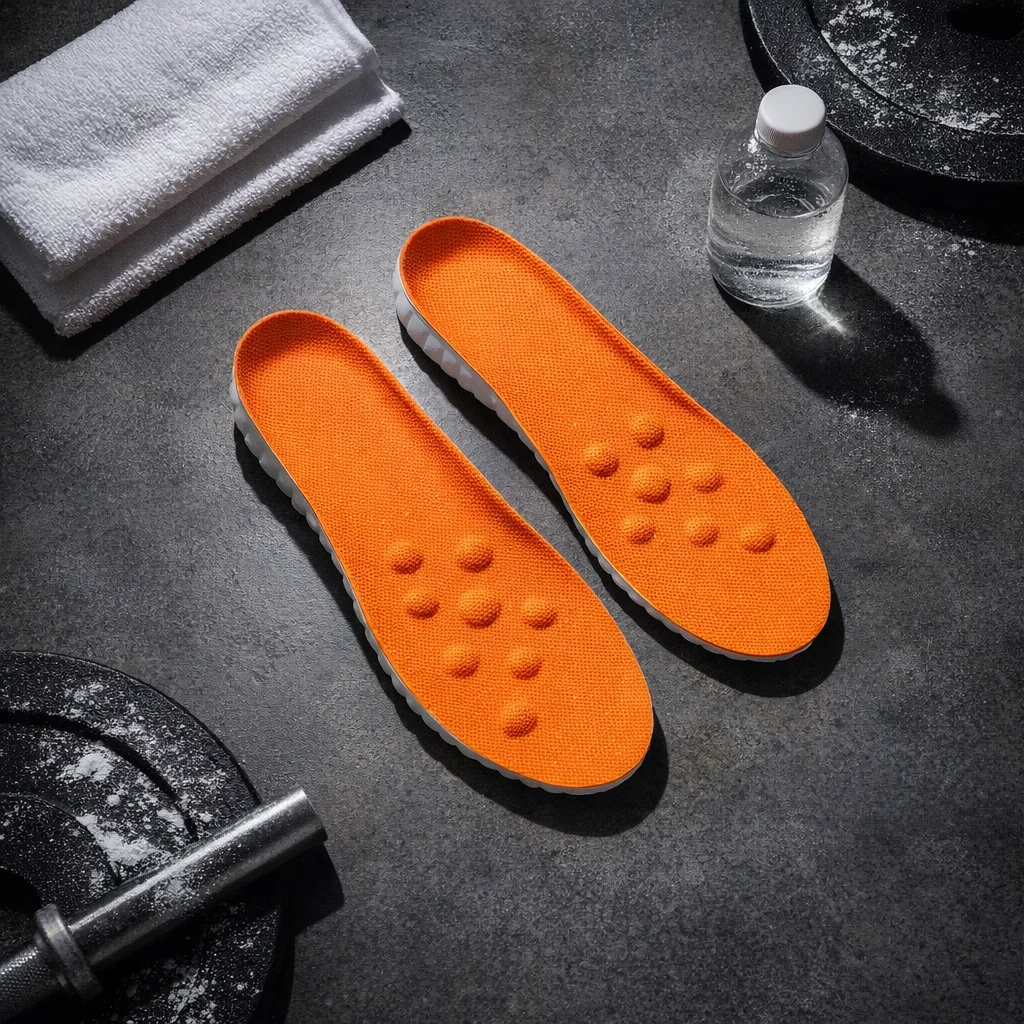
The first thing you notice when you slip these into your shoes is that the texture is present but not aggressive. Some massage insoles go so far with their surface pattern that they feel uncomfortable underfoot, especially during the break-in period. The Zenpace insoles find a balance: you feel the stimulation clearly, but it never crosses into distraction during a workout. Within a few sessions, it becomes something you look forward to rather than something you have to get used to.
The cushioning underneath is substantial enough to make a real difference on hard gym floors, which is a genuine issue for anyone who trains in a facility with concrete under thin rubber matting. At the same time, it does not feel spongy or unstable during compound lifts. That balance is harder to achieve than it sounds.
Performance During Different Workouts
During long cardio sessions, the circulation benefit becomes noticeable around the 20 to 30 minute mark. That point where your feet would normally start to feel heavy and compressed is pushed back significantly. After a 45-minute treadmill run, the difference in how your feet feel compared to standard insoles is meaningful.
During strength training, the stability holds up well. Squatting and deadlifting with an unfamiliar insole can feel awkward if the cushioning is too soft, but the Zenpace insoles provide enough feedback through the sole to maintain confidence in your foot position. This is not a small thing for anyone who lifts seriously.
After the Workout
This is where the real value shows up. The post-workout recovery difference is the most consistently reported benefit from people who make the switch to massage insoles. Feet that used to ache through the evening after a hard session feel noticeably less fatigued. The kind of tightness in the arch and heel that used to linger until the next morning tends to dissipate faster.
Over time, this compounds. When your feet recover better between sessions, your overall training quality improves. You show up to each workout with a fresher foundation.
Honest Considerations
No product is perfect, and it is worth being straightforward about a few things. If you have very specific orthopedic needs, a custom orthotic prescribed by a podiatrist will always be more precisely calibrated to your foot than any off-the-shelf insole, including these. Massage insoles are a wellness and performance upgrade, not a medical device.
There is also a short adaptation period. Your feet are not used to the stimulation, and the first few sessions may feel slightly unusual. Most people find this resolves within three to five workouts. Starting with shorter sessions and building up is a sensible approach.
"The best insole is the one you actually wear consistently. If it feels good, fits well, and makes your feet feel better after a hard session, it is doing its job."
Getting the Most Out of Your Massage Insoles
Buying the right insole is only part of the equation. How you use them matters too.
Pair Them With a Short Foot Warm-Up
Before your workout, spend two or three minutes doing simple foot mobility work. Toe spreads, ankle circles, and a few slow calf raises prime the tissue in your feet to respond better to the stimulation from the insole. You will feel the benefit more acutely and reduce the chance of any initial discomfort.
Rotate Your Footwear
Even the best insoles benefit from time to decompress between sessions. If you train daily, having two pairs of gym shoes with insoles and rotating between them gives each pair time to recover its shape and cushioning. This extends the life of the insole and maintains consistent performance.
Keep Them Clean
Gym insoles absorb sweat and bacteria at a faster rate than everyday footwear insoles. A quick wipe-down after each session and a proper air-dry keeps them fresh and extends their lifespan considerably. Most insoles should be replaced every six to twelve months depending on training frequency, just as you would replace worn running shoes.
Listen to Your Feet
If you experience new pain or discomfort after switching to massage insoles, stop and assess. Sometimes the issue is fit; the insole is too thick for your shoe, or the arch profile does not match your foot. Sometimes it is a sign of an underlying issue that deserves attention from a professional. Massage insoles should feel like an upgrade, not a source of new problems.
Frequently Asked Questions
Are massage insoles for gym use safe for everyone?
For most healthy adults, massage insoles are completely safe and beneficial. However, if you have diabetes, peripheral neuropathy, or any condition that affects circulation or sensation in your feet, you should consult your doctor before using any massage insole. People with existing foot injuries or conditions like severe plantar fasciitis should also get professional guidance before making the switch.
How long does it take to feel the benefits?
Most people notice a difference in post-workout foot fatigue within the first two to three sessions. The circulation and recovery benefits tend to become more apparent after a week of consistent use. The proprioceptive and stability benefits can take a bit longer to notice, since they are more subtle, but many gym-goers report improved confidence in their footing during compound lifts within the first few weeks.
Can I use massage insoles in any gym shoe?
Most massage insoles are designed to fit standard athletic footwear and can be trimmed to match your shoe size. They work best in shoes with a removable stock insole, which you simply replace. Shoes with very low volume or a very thin profile may not accommodate the added thickness comfortably. If you are unsure, the best approach is to try the insole in your shoe before committing to a full workout.
Do massage insoles replace orthotics?
No, and it is important to be clear about this distinction. Custom orthotics are medical devices prescribed and fitted by a podiatrist to address specific structural issues with your feet or gait. Massage insoles are a wellness and performance product designed to improve comfort, circulation, and recovery for healthy active people. If you have been prescribed orthotics, continue using them as directed. If you are simply looking to feel better during and after your workouts, massage insoles are a strong option.
How often should I replace my gym massage insoles?
For someone training four to six times per week, replacing your insoles every six to nine months is a reasonable guideline. If you train less frequently, they can last up to a year. Signs that it is time to replace them include visible flattening of the massage texture, loss of cushioning in the base layer, or a noticeable decline in the comfort and recovery benefits you experienced when they were new.
The Bottom Line: Are They Worth It?
If you train seriously and you have never paid attention to what is inside your gym shoes, massage insoles for gym use represent one of the most cost-effective upgrades you can make to your training setup. The benefits are real, the mechanism is sound, and the difference in how your feet feel after a hard session is something most people notice quickly.
The Zenpace Massage Insoles sit in a strong position in this category. They deliver genuine stimulation without being uncomfortable, hold up under consistent heavy use, and strike the right balance between cushioning and stability for a wide range of training styles. They are not a magic solution, and they are not a substitute for proper footwear, professional care when needed, or smart training habits. But as a daily upgrade that supports your feet through every session and helps them recover faster between them, they earn their place in a serious gym bag.
Your feet carry you through every rep, every run, and every class. It is time to give them something back.
Ready to upgrade your gym experience from the ground up? Shop Zenpace Massage Insoles here and feel the difference in your next session.